
Your Data Isn't Bad, It's Just Living on Different Islands


If I had a dollar for every time a nonprofit staffer apologized to me for their Salesforce data before I'd even opened the org, I could probably retire early. "It's a mess in there." "We haven't cleaned it up in years." "Please don't judge us."
Here's the thing: I'm not judging you. And more importantly — your data probably isn't bad. It's just been collected from a bunch of different places that never got connected to each other.
Every Nonprofit Has Its Own Set of Islands
Most orgs don't collect donor data in one place. You've got a gala sign-in sheet. An online donation form. A volunteer jotting notes during a phone call. Maybe an old CRM you migrated from years ago. Each one of those is its own island — its own little self-contained world with its own version of "who's a donor here."
The people running each island did everything right. Nobody made a mistake. The problem is that none of the islands ever built a bridge to each other, so nobody realized they were all tracking the same person in different places.
That's how you end up with:
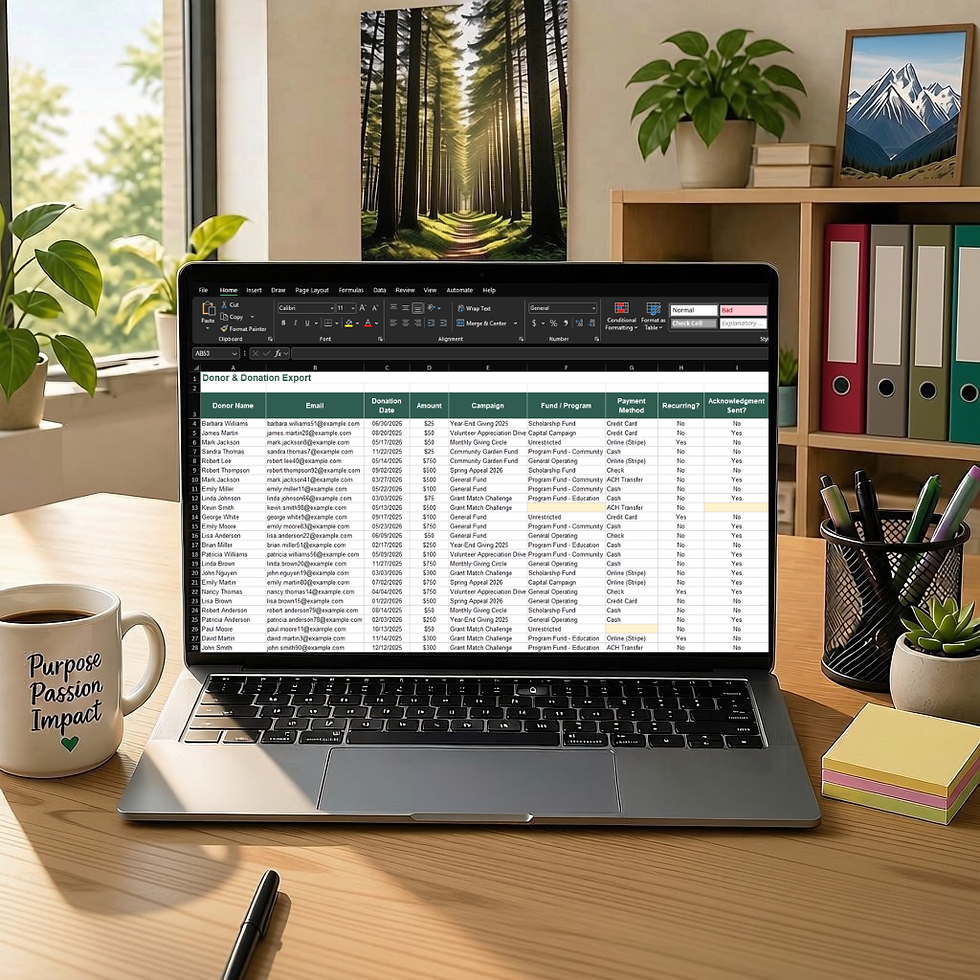
The same donor entered three different ways — once from the gala sheet, once from the online form, once from that phone call, each with slightly different spelling or contact info.
Households that don't know they're households — a married couple showing up as two unrelated individual donors, each getting their own separate mailing, both a little confused about why.
Fields that used to mean something — a "Notes" field with five years of context crammed into it because nobody built a proper field for what people actually needed to track.
Old imports that never fully translated — data that made the leap from Excel or a legacy CRM and never quite got reorganized into how Salesforce actually wants to structure things.
None of that is a tidiness failure. It's just what happens when data gets collected on separate islands instead of in one connected system.
Why This Actually Costs You Something
Disconnected islands aren't just an organizational quirk — they have real downstream costs:
Your reports lie to you. If Sarah Johnson is three different records, your "total donors this year" number is wrong, and so is every dashboard built on top of it.
Your mailings get awkward. Two invitations to the same household, or a "Dear Friend" where a name should be, chips away at donor trust in small but real ways.
Your team stops trusting the system. Once people notice the data's unreliable, they start keeping their own spreadsheets "just in case" — which just builds a new island that'll need connecting later too.
The irony is that a lot of orgs assume the fix is a brand-new system. But swapping platforms without connecting the islands first just means you get to enjoy the same disconnected data with a different logo on it.
The Actual Fix Is Less Dramatic Than You Think
A data cleanup and migration project isn't about starting over — it's about building the bridges between islands that should've been there from the start. That usually looks like:
Finding the duplicates and deciding, record by record, who's actually who across islands.
Grouping related records (households, organizations, affiliations) so Salesforce understands relationships the way your team already does in their heads.
Standardizing the fields so "Notes" stops doing the job of six other fields that don't exist yet.
Migrating cleanly if you're moving from another system, so history doesn't get stranded on an island that's about to be shut down.
It's detailed work, sure. But it's not mysterious, and it's not a referendum on how well your team has been doing their jobs. Nonprofit staff are stretched thin, juggling a dozen intake points on top of everything else — a little island-building over the years isn't a failure, it's just what happens without a bridge crew.
The Good News
Once your islands are actually connected, everything downstream gets easier — reporting, mailings, automation, even your own sanity when someone asks "how many donors do we have?" and you can actually answer with a straight face.
So if you've been quietly apologizing to your Salesforce consultant for your data — you can stop. It doesn't need to be embarrassing. It just needs some bridges.

Comments